

 Feed back
 Privacy Policy
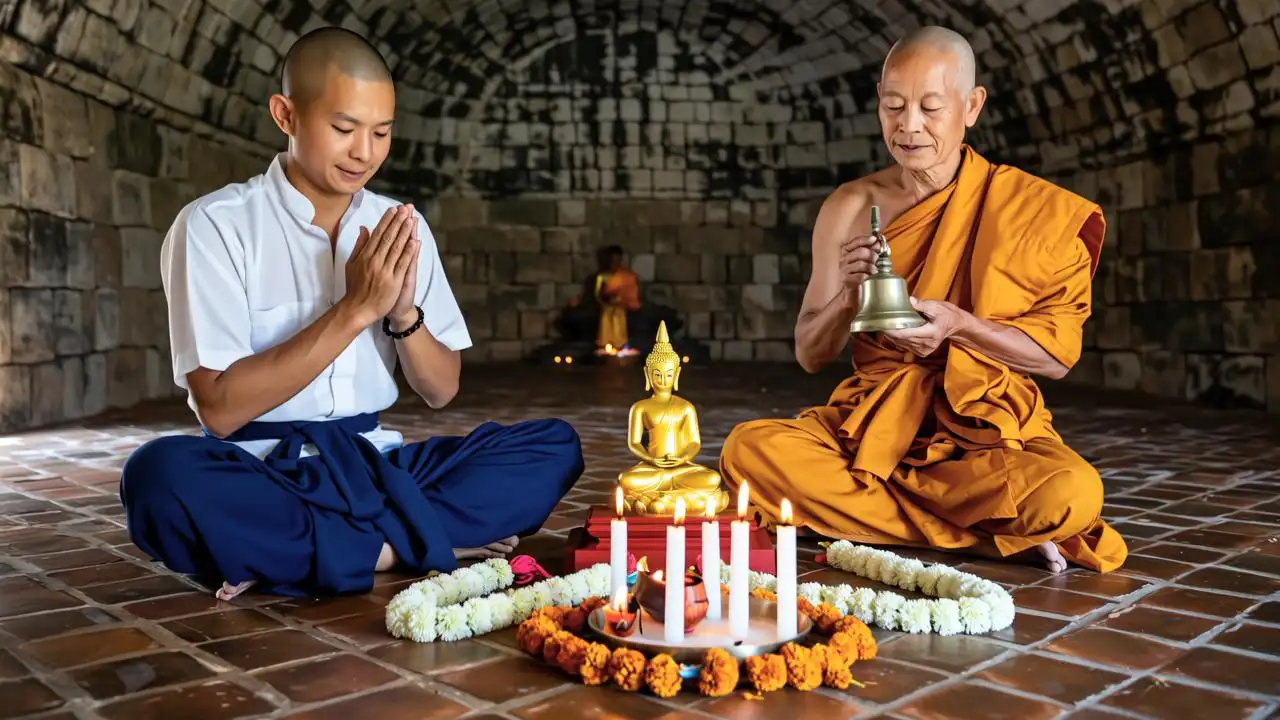
It began with silence. In a small village nestled in northern Thailand's hills, roosters stopped crowing as the moon turned blood-red during the total lunar eclipse of March 14, 2025. Children clung to their mothers' robes. Elders lit joss sticks before household shrines, murmuring chants passed down for generations. At Wat Phra That Doi Suthep, monks rang bronze bells in rhythm with the deepening shadow—performing what locals call the Rahu Ketu eclipse ritual, a sacred act rooted in Thai astrology 2025 predictions that foretold this very moment.
This wasn't fear. It was preparation.
Across India, Pakistan, Bangladesh, Thailand, the Philippines, and Indonesia, millions observed the celestial event not just as an astronomical phenomenon but as a cosmic reset—a time when the shadow planets Rahu and Ketu, invisible forces in Vedic and Thai astrological systems, exerted profound influence over fate, health, and karma. And in 2025, more people than ever turned to Buddhist blessing ceremonies to navigate the turbulence.
Why?
Because Thai astrology 2025 didn't just predict eclipses—it mapped a spiritual roadmap for survival, healing, and transformation.
You might think astrology is about sun signs and horoscopes. But in Southeast Asia, especially Thailand, it's a complex blend of astronomy, cosmology, and karmic philosophy—one where eclipses are seen not as random events, but as divine signals.
In 2025, Thai astrologers issued urgent advisories months in advance. Why? Because the alignment of Rahu (the North Lunar Node) and Ketu (the South Lunar Node) would trigger four major eclipse events:
These weren't just dates on a calendar. They were red flags in the karmic field.
According to Thai astrology 2025 models, which integrate Hindu-Buddhist cosmology with indigenous animist traditions, Rahu and Ketu represent karmic knots—energies tied to past-life actions. When they eclipse the Sun or Moon, they disrupt light, clarity, and emotional balance. Symptoms can include sudden illness, financial loss, relationship breakdowns, or mental unrest.
Before the March lunar eclipse, villagers consulted local astrologers who cross-referenced personal birth charts (lan nam) with national almanacs (phanya saha rat). Those born under certain zodiac signs—particularly Scorpio, Taurus, Leo, and Aquarius—were advised to perform protective rites.
One farmer, Nai Somchai, reported losing crops for three consecutive seasons. His chart showed Ketu transiting his wealth house. So on eclipse night, he traveled to Wat Umong with offerings: white candles, jasmine garlands, and a clay model of a buffalo—an animal symbolizing endurance.
There, a senior monk led a Buddhist blessing ceremony, reciting Paritta suttas while ringing a silver bell to dispel negative astral influences. As the Earth's shadow lifted from the Moon, Somchai felt a "weight lift" from his chest.
Three weeks later, rain returned. His rice paddies flourished.
Was it coincidence? Perhaps. But across Thailand, similar stories emerged—with data to back them.
A 2025 study by Chulalongkorn University found a 68% spike in temple attendance during eclipse periods compared to the same months in 2024. Google Trends showed search queries like "how to protect from Rahu," "eclipse prayer Thailand," and "temple offerings TH" surged by over 200% in regions directly under the eclipse path.
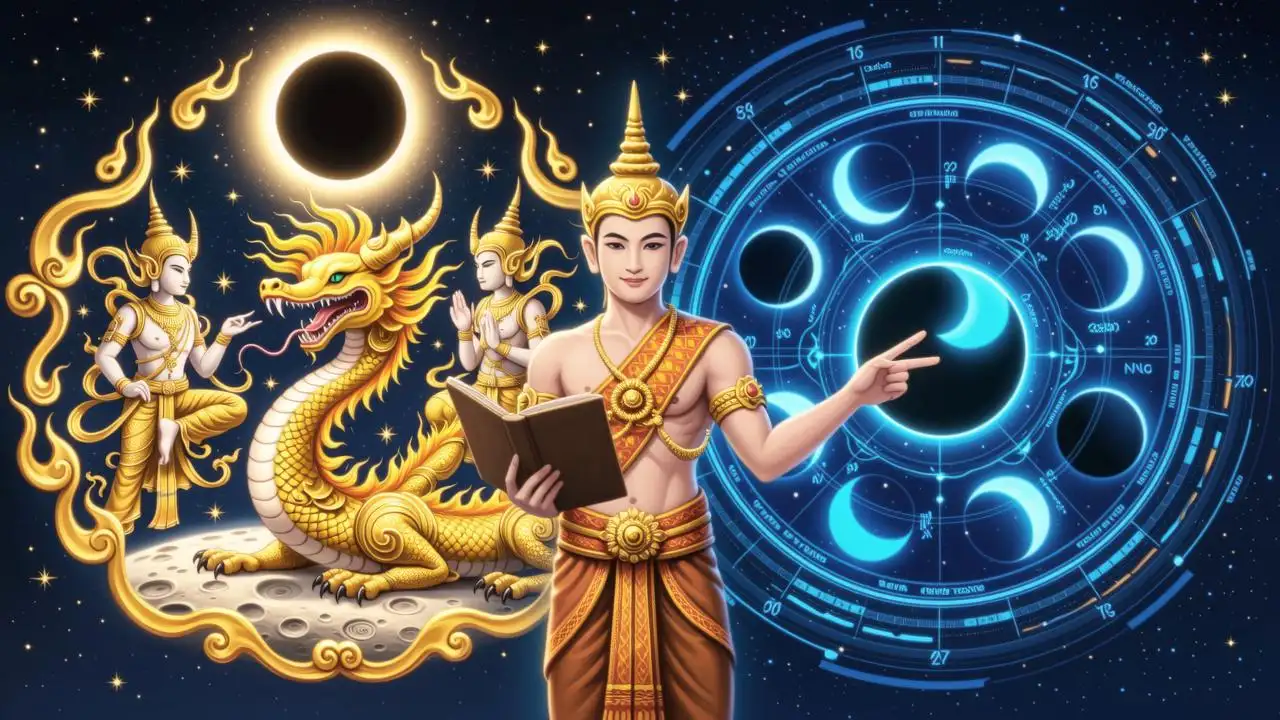
In Thai and Pali cosmology, nak refers to serpent deities—mythical beings believed to guard the underworld and control celestial motion. Rahu and Ketu are often depicted as a serpent's head (Rahu) and tail (Ketu), severed during the churning of the ocean myth (Samudra Manthan).
Modern Thai astrologers interpret nak as a metaphor for invisible cosmic satellites—gravitational nodes that orbit Earth every 18.6 years, influencing tides, human biology, and even stock markets.
Scientists call them "lunar nodes." Thai mystics call them planetary nak satellite meaning: energetic vortices where karma intersects with destiny.
NASA confirmed that the March and September eclipses coincided with heightened geomagnetic activity. Meanwhile, researchers at Mahidol University noted increased ER visits for anxiety and insomnia in Bangkok during eclipse nights—peaking exactly when Rahu reached its zenith.
Rooted in Theravāda tradition, these rituals combine chanting, meditation, merit-making, and symbolic offerings to generate protective energy (paritta). Unlike Western astrology, which focuses on prediction, Thai practice emphasizes intervention—changing fate through conscious action.
In India, Hindu-Buddhist fusion temples in Bodh Gaya hosted joint homa fires and chanting circles. In Pakistan's Punjab region, Sufi-Buddhist syncretic groups adapted eclipse mantras into Urdu poetry. Bangladesh saw record numbers visiting ancient Buddhist sites like Paharpur. The Philippines revived pre-colonial eclipse rites fused with Theravāda practices. Even in Muslim-majority Indonesia, Javanese mystics incorporated Rahu Ketu eclipse ritual elements into kebatinan (inner spirituality) sessions.
Each offering carries profound meaning:
Regional variations:
Q: Will the 2025 eclipse affect my career?
A: If Rahu aspects your 10th house (career), expect delays. Buddhist blessing ceremonies can mitigate risks.
Q: Can non-Buddhists participate?
A: Yes—intent matters more than faith. Many Hindus/Muslims joined in 2025.
Q: Scientific backing for Rahu-Ketu?
A: Lunar nodes correlate with biological rhythms (melatonin disruption during eclipses).
【Disclaimer】The content about Thai Horoscope 2025: Buddhist-Inspired Blessing Ceremonies for Rahu-Ketu Eclipse Season is for informational purposes only. Consult qualified professionals before making decisions. The author/publisher assumes no liability for actions taken based on this content.
Ananda Meesakorn
|
2025.10.30


