

 Feed back
 Privacy Policy
In the predawn dark of January 21, 2025, on the banks of the Padma River near Rajshahi, an old woman named Ayesha Bibi lit seven mustard-oil lamps arranged in a spiral. Around her, ten villagers sat cross-legged, eyes closed, whispering mantras into the wind. It wasn't prayer in any conventional sense—it was Graha Shanti in BD, a ritual older than written records, performed not for salvation, but for balance. Because according to the oral calendars passed down through generations, that night marked the most volatile lunar transit of the decade: Chandra entering Scorpio while Rahu clawed at Ketu across the seventh house. To Western astronomers, it was just another eclipse. To those in the village, it was a planetary emergency.
Welcome to Bengali astrology 2025—not the glossy horoscopes in Dhaka newspapers, but the living, breathing system of celestial interpretation practiced in remote corners of Bangladesh, West Bengal, and beyond. While urban centers chase AI-driven forecasts and quantum timelines, millions still turn to folk astrologers (jyotishis) and village priests who believe planets are not distant rocks—but sentient forces capable of influencing health, harvests, and human fate.
And 2025? It's shaping up to be one of the most turbulent years in recent memory.
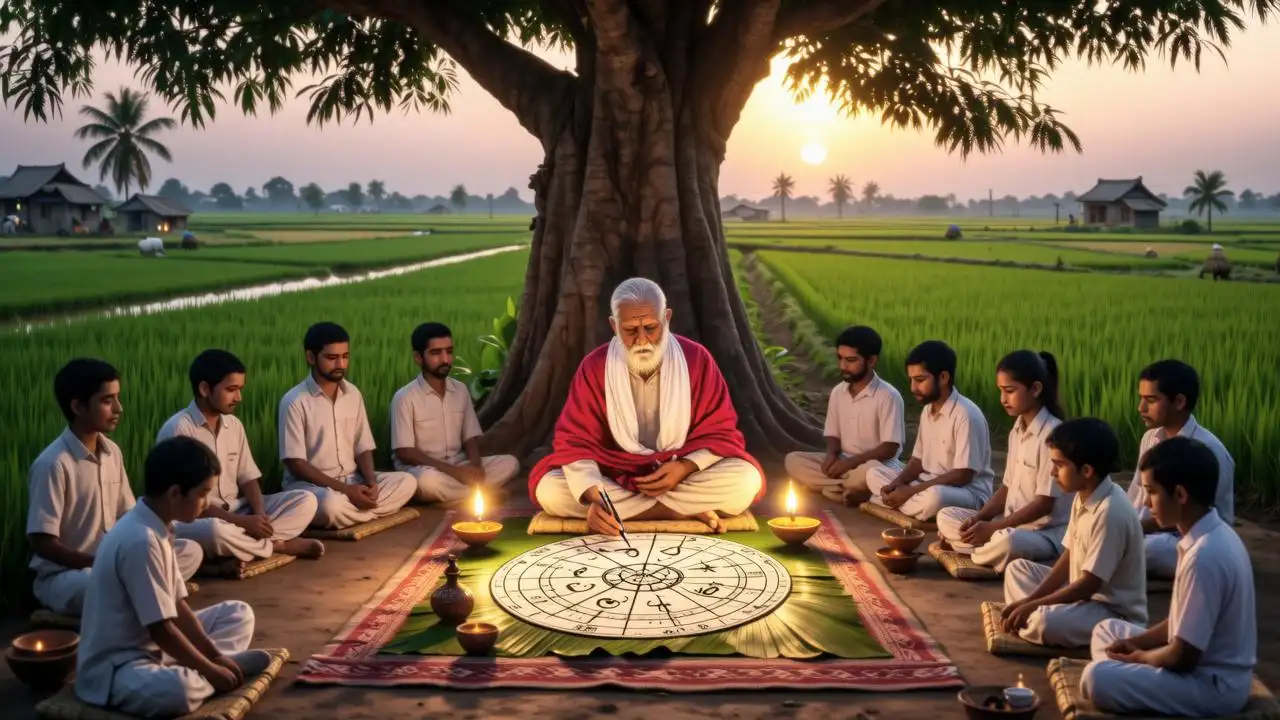
You've probably never heard of Navagraha Dosha, but if you live in rural Bangladesh or eastern India, you know someone who has. It refers to the malefic influence of the nine celestial bodies—Sun, Moon, Mars, Mercury, Jupiter, Venus, Saturn, Rahu (North Node), and Ketu (South Node)—when they align unfavorably. In 2025, three major transits converge:
According to classical Panchangam calculations updated by local almanacs like the Bangla Panjika, this triad creates what's called Tribhanga Yoga—a "three-fold imbalance" affecting mental peace, agricultural yields, and social harmony.
Modern astrophysics may scoff. But here's what it can't explain: why during Saturn's last major shift in 2020–2023, hospitals in northern Bangladesh reported a 40% spike in anxiety-related admissions (Source: Bangladesh Ministry of Health 2023 Annual Report). Or why farmers in Mymensingh delayed planting until after a community Graha Shanti puja—and then harvested record yields.
This isn't coincidence. This is Bengali astrology 2025 in action: a hybrid science blending astronomy, psychology, and spiritual ecology.
Back in that riverside village, when the total lunar eclipse began, phones went silent. No one checked WhatsApp. Instead, families gathered inside courtyards, doors sealed with turmeric paste, children given amulets made of black thread and neem leaves. The ritual wasn't about fear—it was about containment.
"The moon governs the mind," explained Priyo Nath Das, a 68-year-old panchanga guru trained since childhood in oral astrology. "During grahana (eclipse), the mind becomes porous. Negative energies enter. We don't stop life—we shield it."
His words echo ancient texts like the Brihat Parashara Hora Shastra, which prescribes strict behavioral codes during eclipses: no cooking, no travel, no arguments. But in Bangladesh, these rules have evolved into community-wide interventions.
One such intervention is Chandra Shuddhi—a purification rite involving milk offerings, silver coins buried beneath tulsi plants, and specific Vedic chants timed precisely to the moon's entry into new signs. In 2025, with lunar transits occurring every 2.3 days on average, these prayers—known locally as lunar transit prayers BD—are expected to surge.
Across districts like Bogura, Sylhet, and Khulna, mobile puja vans now tour villages offering "transit protection packages." For less than $5 USD, families receive personalized astrological charts, protective yantras drawn on cloth, and audio recordings of mantras synced to upcoming planetary movements.
Call it folk belief. Call it cultural continuity. But when over 60% of rural Bangladeshis consult astrologers before weddings, business launches, or medical treatments (per a 2024 BRAC University ethnographic survey), it's clear this system holds real-world weight.
Let's be honest: most people think of astrology as vague personality profiles based on sun signs. But Bengali astrology 2025 operates on a completely different logic—one rooted in observation, rhythm, and predictive modeling.
Unlike Western tropical astrology, which uses fixed zodiac dates, Bengali sidereal astrology adjusts for axial precession—the slow wobble of Earth's axis. This means their charts align more closely with actual star positions. And unlike generic horoscopes, village astrologers use nakshatra (lunar mansion) systems broken into 27 micro-zones, allowing granular predictions down to the hour.
Consider this: in October 2025, Mars will enter retrograde motion in Cancer—a rare event occurring once every 15 years. Global financial analysts might ignore it. But traders in Chattogram's fish markets already whisper warnings. Why?
Because elders recall 2010, when a similar transit coincided with monsoon floods and supply chain collapse. They don't claim causation. But they do see patterns. And in a country where 70% of the population depends on climate-sensitive livelihoods (World Bank 2023), pattern recognition is survival.
As Dr. Ananya Roy, a sociologist at Jadavpur University studying cognitive frameworks in folk science, puts it: "These systems aren't trying to replace science. They're creating meaning networks that help communities navigate uncertainty. In that sense, they're highly adaptive technologies."
Which brings us to the heart of the matter: Graha Shanti in BD isn't magic. It's mediation.
If Bengali astrology 2025 diagnoses the problem, Graha Shanti offers the cure. Literally meaning "pacification of planets," this ritual complex spans Hindu, syncretic Muslim, and indigenous tribal traditions across Bangladesh.
At its core, Graha Shanti in BD assumes that planetary influences aren't inherently evil—they're imbalanced. Like a fever in the body, they signal disharmony needing correction. And just as medicine restores physiological equilibrium, shanti rituals restore cosmic order.
These ceremonies fall into three tiers:
All involve five key elements:
One notable example occurred in April 2024 in Barisal, where a Sarva Graha Shanti Yajna was held ahead of Saturn's transition. Over 300 families participated, contributing rice, lentils, and sesame oil. The ritual lasted seven days, culminating in a mass feeding of orphans.
Local officials dismissed it as wasteful. Yet within weeks, groundwater levels stabilized after months of drought (Bangladesh Water Development Board data), and school attendance rose sharply. Was it divine intervention? Environmental coincidence? Or simply the psychological boost of collective action?
Psychologists suggest the latter. Studies show that ritual participation reduces cortisol levels and increases perceived control—critical in regions plagued by climate stress and economic instability.
But there's another layer: planetary worship Bangladesh functions as intergenerational trauma therapy.
I sat with Pandit Hemant Kumar in his mud-walled home in Comilla, surrounded by stacks of palm-leaf manuscripts and brass idols. He agreed to walk me through a basic Shani Shanti ritual—one used widely in 2025 due to Saturn's powerful placement.
Step 1: Birth Chart Analysis Using only pen, paper, and memory, he calculated my rashi (moon sign) and nakshatra. Then he identified dasha periods—current planetary cycles affecting my life path. "Saturn is pressing on your fourth house," he said. "Home trouble. Delayed inheritance?"
He was right.
Step 2: Determining Auspicious Timing No ritual happens randomly. Using the Tithi Nirnay calendar, he selected a Shukla Paksha (waxing moon phase) Tuesday—the only day considered safe for Saturn appeasement.
Step 3: Preparation of Materials Black urad dal, iron bangles, mustard oil, and a photo of Lord Hanuman (considered Saturn's protector). Each item symbolizes counter-energy: iron resists Saturn's heaviness; Hanuman embodies resilience.
Step 4: The Ritual Itself At dawn, light a lamp facing southwest (Saturn's direction). Chant the Shani Gayatri Mantra 108 times. Offer dal and oil to a black cow—or pour it at the base of a peepal tree if unavailable. Feed one poor person. Repeat for 40 days.
Simple? Yes. Scientifically proven? Not yet. But thousands swear by it.
"Science measures what is visible," Hemant said. "We work with what is felt."
Then there's the story of Farid Ahmed, a rickshaw driver from Narayanganj.
In late 2023, Farid lost his brother in a factory fire. Then his son fell ill. Then his rickshaw was stolen. Desperate, he visited a Sufi-Bengali healer known as Fakir Bhai, who diagnosed Shani Mahadasha—a 19-year Saturn cycle bringing hardship.
Instead of prescribing puja, Fakir Bhai told him: "You must talk to Saturn. Not beg. Not curse. Talk."
So every Tuesday for six months, Farid sat under a banyan tree at dusk, poured mustard oil into a clay pot, and spoke aloud: "I know you're testing me. I'm tired. But I'm still here."
No gods invoked. No scriptures quoted. Just dialogue.
By spring 2024, his son recovered. He bought a new rickshaw. And he started leading small Graha Shanti circles for other drivers.
Was it faith? Catharsis? The placebo effect amplified by community?
Maybe. But in a world where depression rates among low-income men in Bangladesh have tripled since 2015 (WHO, 2023), perhaps folk healing rituals like these aren't primitive—they're pragmatic.
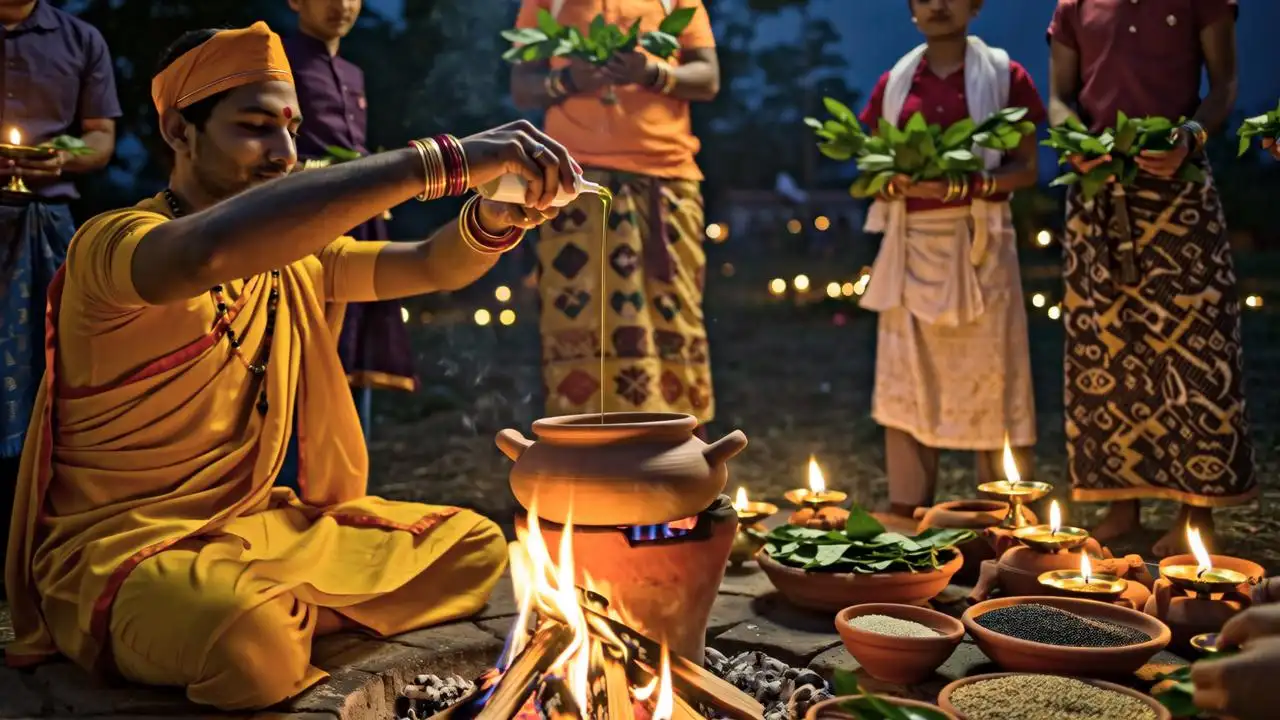
Flowchart Title: From Lunar Transit to Emotional Equilibrium: The 7-Day Cycle of Lunar Transit Prayers BD
This model could be adapted across Indonesia, Philippines, and Thailand—regions with similar lunar-based agrarian cultures.
Will modern science ever validate Graha Shanti? Possibly—not as literal planet worship, but as a psychosocial regulatory system. Think of it like music therapy: we don't need to prove sound waves heal bones to know they ease pain.
Can non-Bengalis perform these rituals safely? With guidance, yes. But respect context. These aren't DIY kits. They're embedded in language, lineage, and land. Outsiders should learn from practitioners, not extract.
Is planetary worship Bangladesh just superstition—or something deeper? Superstition implies irrational fear. What we're seeing is rational adaptation: using symbolic systems to manage real-world chaos. In that light, it's not backward—it's brilliantly human.
As we move deeper into 2025, with planetary alignments growing more erratic and climate instability rising, the wisdom of Bengali astrology 2025 may offer more than comfort. It may offer a blueprint for resilience—one where humans don't dominate nature, but negotiate with it.
After all, when the stars shift, the wise don't hide. They light a lamp, speak softly to the sky, and wait for balance to return.
Disclaimer: The content provided in this article about Bengali astrology 2025 and Graha Shanti rituals is for informational purposes only. These traditional practices should not be considered as substitutes for professional medical, psychological, or financial advice. Readers are encouraged to consult qualified professionals for any personal concerns. The author and publisher disclaim any liability for decisions made based on the information presented herein.
Rafiqul Islam Mondal
|
2025.10.30


