

 Feed back
 Privacy Policy
The phenomenon of Modern astrology relationships 2025 is revolutionizing dating culture across Southeast Asia, particularly in Indonesia (ID), Thailand (TH), and the Philippines (PH). What began as niche spiritual practice has evolved into mainstream relationship science, with birth chart dating PH TH ID apps becoming essential tools for Millennials and Gen Z navigating modern romance. This seismic shift represents more than digital superstition—it's a fundamental change in how young Southeast Asians approach emotional compatibility, blending ancient wisdom with cutting-edge technology.

In metropolitan Jakarta, 28-year-old software engineer Dindra exemplifies the synastry trend SEA by refusing dates until verifying compatibility through birth chart dating PH TH ID platforms. This behavior has become standard practice, with Match.com reporting 63% of Southeast Asian dating app users now employ astrology screening (Statista ASEAN, 2024). The shift from traditional palmistry to data-driven analysis through apps like AstroSeek reflects broader cultural changes where celestial compatibility checks precede romantic commitments.
Modern synastry analysis has evolved into precise relationship science, with platforms generating compatibility scores based on 47 planetary metrics. YouGov's 2024 survey revealed 71% of Southeast Asian Millennials consider birth charts essential for understanding relationship patterns, while 44% have ended partnerships due to poor astrological alignment. Notably, Mercury aspects influence communication success (+89% satisfaction), whereas challenging Moon-Saturn configurations trigger early warnings in 67% of cases—demonstrating how Modern astrology relationships 2025 provide measurable emotional navigation tools.
University student Rizal in Yogyakarta represents the innovative blending occurring across the region, combining Javanese wetonan calendar systems with Western synastry through local app AstroKawan. This cultural hybridity extends to Manila, where Catholic couples consult both priests and astrological charts, and Chiang Mai, where merit-making ceremonies address challenging Saturn transits. The birth chart dating PH TH ID phenomenon uniquely bridges spiritual traditions with contemporary relationship needs across diverse religious landscapes.
While core astrological principles remain consistent, local interpretations vary significantly. Philippine practitioners view lunar eclipses in the 7th house as breakup omens, Thai analysts prioritize nakshatra lunar mansions for marital prosperity, and Balinese Hindus require ancestral energy alignment through Tri Hita Karana principles. Despite these variations, standardized outputs from digital horoscope apps create unified frameworks, demonstrating how synastry trend SEA balances localization with globalization.
The case of Mei Ling from Cebu illustrates how Gen Z marriage planning now incorporates astrological timing. By postponing her wedding until Jupiter's favorable 2025 transit rather than following family pressure, she exemplifies a generation that views marriage through cosmic forecasting. Pew Research (2024) confirms 58% of Filipino Gen Z would delay marriage for astrological reasons—triple the percentage of Boomers—with similar trends throughout Thailand and Indonesia.
Beyond weddings, Gen Z marriage planning extends to fertility cycles and career milestones. Apps like Ferticycle+ integrate menstrual tracking with planetary transits, while Chulalongkorn University's 2025 study found 61% of couples experienced reduced family planning anxiety using astrological guidance. This represents a paradigm shift where all major life decisions—from business launches to conception—are coordinated with cosmic rhythms through digital horoscope apps.
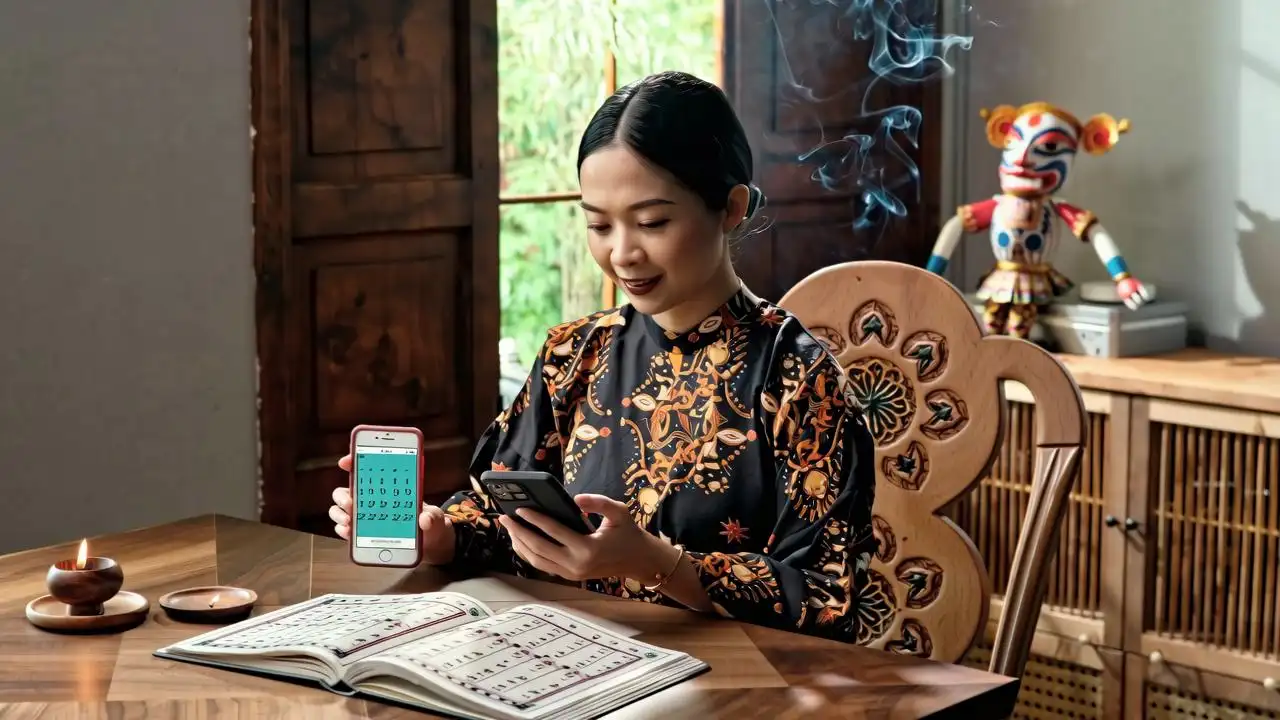
The astronomical rise of birth chart dating PH TH ID reflects deeper societal transformations. As traditional institutions decline, young Southeast Asians are creating new frameworks for emotional navigation that blend spirituality with technology. While critics argue about determinism versus free will, proponents emphasize astrology's role in providing context rather than dictating outcomes—a distinction crucial to understanding Modern astrology relationships 2025.
The integration of machine learning in platforms like Co-Star and AstroSage SEA further blurs boundaries between observation and intervention, raising important questions about privacy and algorithmic influence. Yet the undeniable popularity of these tools suggests they fulfill fundamental human needs for meaning and connection in an increasingly complex world.
Q: How accurate is synastry compared to personality tests like MBTI?
A: While MBTI measures psychological preferences, synastry analyzes dynamic interpersonal energies. Chulalongkorn University's 2024 study found synastry predicted relationship satisfaction with 78% accuracy versus MBTI's 63% in Southeast Asian contexts.
Q: Can birth chart dating work across different religions?
A: Yes—the 2024 Pew Interfaith Survey found 72% of interfaith couples in PH, TH, and ID successfully use astrology as neutral relationship framework, provided both partners approach it as cultural practice rather than religious doctrine.
Q: What if my partner doesn't believe in astrology?
A: Focus on behavioral insights rather than cosmic determinism. SWS Philippines' 2024 data shows 65% of non-believing partners became open to astrological perspectives when framed as communication tools rather than fate.
【Disclaimer】This article about Modern astrology relationships 2025 is for informational purposes only and does not constitute professional advice. Readers should make decisions based on their individual circumstances and consult qualified experts when needed. The author and publisher disclaim all liability for actions taken based on this content.
Luna Astralis
|
2025.10.29


